The Blue That Will Fly Again: The Promise of the Spix’s Macaw Return to Brazilian Skies


The Spix’s Macaw (Cyanopsitta spixii), an endemic species of the Caatinga biome in the state of Bahia and the sole representative of its genus, has become a symbol of biodiversity conservation efforts in Brazil after being declared extinct in the wild in 2002 (ICMBio, 2026). Its geographic distribution remained uncertain until 1986, when the last known specimens were located in the municipality of Curaçá, Bahia. Following the disappearance of the final free-ranging individual in 2000, a broad national and international mobilization aimed at preserving the species was initiated. Ex situ management, coordinated by institutions such as the Chico Mendes Institute for Biodiversity Conservation (ICMBio), proved essential to achieving successful captive breeding outcomes.
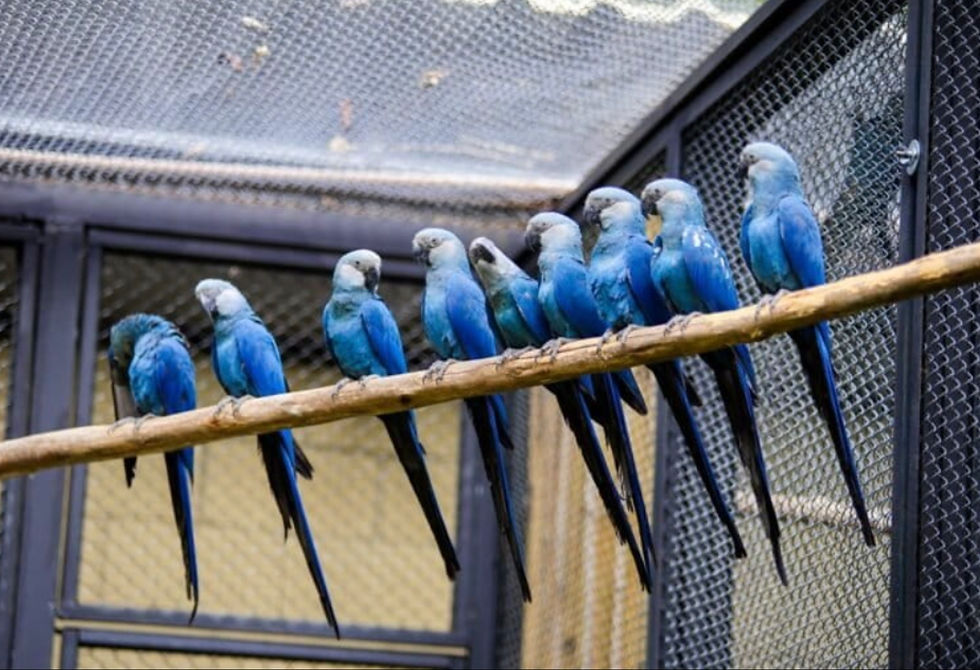
Figure 1. Spix’s Macaws housed in an enclosure specifically designed for the species at the São Paulo Zoo. (Source: Mongabay, 2024)
Illegal capture and habitat degradation, particularly within the riparian forests of Bahia’s semiarid region, were the primary causes of the species’ population collapse throughout the twentieth century. By 1990, only a single individual remained in the wild, prompting the creation of the Permanent Committee for the Recovery of the Spix’s Macaw (CPRAA) by the Brazilian Institute of Environment and Renewable Natural Resources (IBAMA) (Barros et al., 2012). From this milestone onward, an integrated conservation program was established, involving both national and international institutions.
Ex situ management became the central strategy for species recovery, particularly through breeding programs conducted by institutions such as Birds International Incorporated (Philippines), Al Wabra Wildlife Preservation (Qatar), and the Association for the Conservation of Threatened Parrots (ACTP) in Germany. The introduction of artificial insemination techniques beginning in 2013 increased genetic diversity and improved reproductive success within captive populations (Purchase, 2019). By 2017, the captive population had reached 152 individuals, enabling the initiation of planning efforts for the species’ reintroduction into the wild (Lugarini et al., 2021).
Simultaneously, habitat conservation initiatives were implemented. In 2018, the Spix’s Macaw Wildlife Refuge and the Spix’s Macaw Environmental Protection Area were established, consolidating protected areas within the region of Curaçá, Bahia, the species’ historical range (Brazil, 2018). Farms such as Gangorra, Concórdia, and Ararinha Azul were acquired and restored, forming the core of the Spix’s Macaw Breeding and Reintroduction Center, which is responsible for the management, acclimatization, and training of individuals designated for release (Lugarini et al., 2021).

Figure 2. The first two Spix’s Macaws born in the wild flying over the Caatinga biome. (Source: Mongabay, 2024)
The second cycle of the National Action Plan (PAN) for the Spix’s Macaw, in effect from 2019 to 2024, established as its primary goals the reintroduction of the species into its original distribution range, the strengthening of free-ranging populations, and the engagement of local communities in sustainable practices (ICMBio, 2019). In 2020, fifty-two Spix’s Macaws were repatriated from Germany to Brazil, and approximately twenty individuals entered the pre-release adaptation program (Lugarini et al., 2021).
In 2025, an outbreak of circovirus was identified among Spix’s Macaws maintained at the Spix’s Macaw Breeding and Reintroduction Center in Curaçá, Bahia, raising serious concerns regarding the project’s biosecurity measures. The virus, which compromises the immune system of affected birds, resulted in the temporary suspension of release activities and the implementation of strict sanitary protocols, including quarantine procedures, laboratory testing, and isolation of infected individuals (ICMBio, 2025).
The psittacine circovirus, originally identified in Australia, is the primary causative agent of Psittacine Beak and Feather Disease (PBFD), which affects macaws, parrots, and parakeets. This disease is incurable and frequently fatal, being characterized by alterations in feather coloration, feather growth abnormalities, and beak deformities. Although it poses no risk to humans or production birds, its presence within wild psittacine populations is devastating (ICMBio, 2025).
The suspension of release activities is justified because infected birds, as well as asymptomatic carriers, could disseminate the virus into the natural environment, placing at risk not only reintroduced individuals but also other native species. As circovirus weakens the immune system, affected birds become more susceptible to secondary infections. Furthermore, they may exhibit reduced adaptability following release, limitations in flight quality and duration, impaired thermoregulation, and a direct compromise of the objectives and overall success of the conservation program (ICMBio, 2025).
Despite criticism regarding the transparency and management of the project, ICMBio reaffirmed that the reintroduction plan remains active, with reinforced biosecurity measures and continued international technical support. According to a report published by Mongabay Brasil, the outbreak highlighted disagreements among partner institutions and underscored the inherent challenges associated with conservation initiatives involving multiple stakeholders and interests (Mongabay Brasil, 2025).
The trajectory of the Spix’s Macaw represents an emblematic example of the integration of science, public policy, international cooperation, and community participation, demonstrating that coordinated efforts can reverse critical extinction scenarios. Its return to the skies of Brazil’s northeastern backlands symbolizes not only the recovery of a species but also the reconnection of the Caatinga biome with one of its most representative ecological icons.
Author: Maylon Maurílio - Director of Associations, GEAS Brasil.
Review: Iago Junqueira - GEAS Brasil Partner through The Wild Place
Wild Painel de June/2026
REFERENCES
BARROS, Y. M. et al. Plano de Ação Nacional para a Conservação da Ararinha-azul (Cyanopsitta spixii). Brasília: ICMBio, 2012.
BIRDLIFE INTERNATIONAL. Cyanopsitta spixii (Spix’s Macaw). The IUCN Red List of Threatened Species 2019: e.T22685513A153628595. Disponível em: https://www.iucnredlist.org/species/22685513/153628595. Acesso em: 4 nov. 2025.
BRASIL. Criação do Refúgio de Vida Silvestre da Ararinha-Azul e da Área de Proteção Ambiental da Ararinha-Azul, no Estado da Bahia. Decreto nº 9.346, de 19 de abril de 2018. Diário Oficial da União, Brasília, 20 abr. 2018.
ICMBIO – INSTITUTO CHICO MENDES DE CONSERVAÇÃO DA BIODIVERSIDADE. Plano de Ação Nacional para a Conservação da Ararinha-Azul: 2012–2017. Brasília: ICMBio, 2012.
ICMBIO – INSTITUTO CHICO MENDES DE CONSERVAÇÃO DA BIODIVERSIDADE. Segundo Ciclo do Plano de Ação Nacional (PAN) para a Ararinha-Azul: 2019–2024. Brasília: ICMBio, 2019.
ICMBIO – INSTITUTO CHICO MENDES DE CONSERVAÇÃO DA BIODIVERSIDADE. Nota técnica sobre o surto de circovírus em ararinhas-azuis no Centro de Reprodução e Reintrodução de Curaçá (BA). Brasília: ICMBio, 2025.
LUGARINI, C. et al. Reintrodução da ararinha-azul (Cyanopsitta spixii): avanços e desafios. Biodiversidade Brasileira, v. 11, n. 2, p. 64–79, 2021.
MONGABAY BRASIL. Surto de vírus entre ararinhas-azuis expõe desafios na reintrodução da espécie. São Paulo, 2025. Disponível em: https://brasil.mongabay.com. Acesso em: 4 nov. 2025.
PURCHASE, D. Captive breeding and genetic management of the Spix’s Macaw (Cyanopsitta spixii). International Zoo Yearbook, v. 53, p. 1–10, 2019.


Comments